New HVAC Technology in 2026: What Is Worth It for Buildings in Goa
Low-GWP refrigerants, oil-free chillers, radiant cooling, AI controls and more: which new HVAC technology suits Goa's humid coastal climate, and which doesn't.
Air conditioning is usually the largest electricity load in a Goa building, and the equipment is changing fast. New refrigerants are arriving because of India's commitments to cut climate-warming gases, efficiency labels keep getting stricter, and software is starting to run plant rooms better than people can.
Not every new technology suits Goa, though. Our climate is hot and humid for most of the year, salt air attacks outdoor equipment, and most buildings are villas, apartments, hotels and small commercial blocks rather than large campuses. This article reviews what is new and gives our honest view of where each one fits.
Our view of each technology is a general guide for Goa buildings. The right choice for a project depends on its size, use, budget and operating hours.
At a glance
| Technology | What it does | Our view for Goa |
|---|---|---|
| Low-GWP refrigerants (R-32, R-290, R-454B) | Cut the climate impact of refrigerant leaks | Choose them now |
| Higher-efficiency inverter splits and VRF | Use less electricity at part load | Choose them now |
| VRF with heat recovery | Moves heat between rooms, feeds hot water | Worth it in hotels |
| Heat pump water heaters | Hot water at a third of the energy of electric heaters | Worth it in hotels, hostels, hospitals |
| Magnetic-bearing (oil-free) chillers | Very efficient at part load, little maintenance | Worth it for larger chilled water plants |
| Radiant cooling with DOAS | Chilled water in ceilings or slabs, fresh air dried separately | Promising, needs careful humidity control |
| Energy recovery and DOAS | Recovers energy from exhaust, controls humidity | Choose them now (our guide) |
| AI and analytics in the BMS | Learns the building and optimises the plant | Worth it in larger buildings |
| Thermal energy storage | Makes cooling at night, uses it by day | Only where tariffs reward it |
| Evaporative cooling (IDEC) | Cools with water instead of compressors | Not suited to Goa's humidity |
Refrigerants: the change already under way
Most older air conditioners in India use HFC refrigerants such as R-410A, which trap far more heat in the atmosphere than carbon dioxide when they leak. Under the Kigali Amendment to the Montreal Protocol, India has committed to freeze HFC production and consumption at its baseline in 2028, then cut it by 10% by 2032, 20% by 2037, 30% by 2042 and 85% by 2047 (source).
What that means in practice:
- R-32 is now the common refrigerant in split ACs and many VRF systems. It has a much lower global warming potential than R-410A and good efficiency.
- R-290 (propane) has a very low global warming potential and excellent efficiency, and some split ACs in India already use it. It is flammable, so charge limits and installation rules matter, and it is mostly used in smaller systems.
- R-454B and other newer blends are appearing in larger systems as replacements for R-410A.
Our advice: specify low-GWP refrigerants on new projects now. Equipment bought today will run for 10 to 15 years, well into the phase-down, when older refrigerants become scarcer and dearer to top up.
More efficient air conditioners and VRF
The Bureau of Energy Efficiency (BEE) periodically raises the efficiency needed for each star rating of room ACs, measured as ISEER (seasonal efficiency), and tightened the thresholds again for 2026. A five-star AC from a few years ago may now rate only four stars. Always check the label period printed at the bottom of the star label, not just the number of stars.
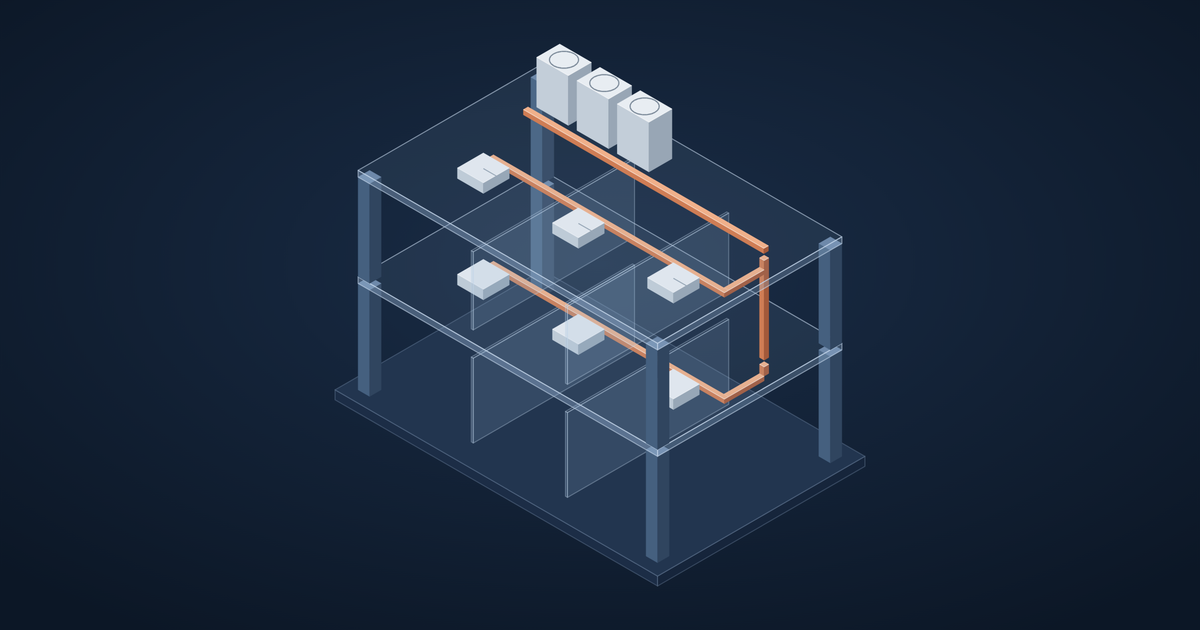
For larger buildings, modern VRF systems with inverter compressors, refrigerant sensors and smart central controllers use far less energy at part load, which is where Goa buildings spend most of their hours.
VRF with heat recovery goes a step further: it can cool some rooms while heating others, or use the heat removed from rooms to make hot water. In a hotel, where guest rooms need cooling while the laundry and bathrooms need hot water, that heat is otherwise thrown away.
Heat pump water heaters
An electric geyser turns one unit of electricity into one unit of heat. A heat pump water heater moves heat from the air into the water, typically producing about three units of heat for each unit of electricity. In Goa's warm air they work especially well, and the cool air they discharge can even be used in kitchens or laundries.
Where they pay back fastest: hotels, resorts, hostels, hospitals and large villas with several bathrooms, where hot water runs every day of the year.
Magnetic-bearing (oil-free) chillers
For larger buildings with chilled water plants, such as big hotels, hospitals and malls, chillers with magnetic-bearing compressors are a real step forward. The shaft floats in a magnetic field, so there is no oil and almost no friction. They are particularly efficient at part load, run quietly and need less maintenance.
Our view: worth evaluating for any new chilled water plant above a few hundred tonnes of refrigeration, or when an old chiller is replaced.
Radiant cooling with a dedicated outdoor air system
Radiant cooling circulates chilled water through pipes in the ceiling, slab or walls, so the room surfaces absorb heat directly. Water carries heat far more efficiently than air, so fans and ducts shrink, and the higher chilled water temperature lets the chiller run more efficiently.
There is a well-documented Indian example. At an Infosys office in Hyderabad, the building was split into two identical halves, one with radiant cooling and one with conventional air conditioning. The radiant half reportedly cut energy bills by about 38% and cost slightly less to build (source).
The catch in Goa: cold surfaces sweat if the room air is humid. Radiant cooling only works in Goa when a dedicated outdoor air system keeps the indoor dew point safely below the panel temperature, the building is well sealed, and the controls shut off the chilled water if the dew point rises. Done properly, it is one of the most efficient and comfortable systems available; done carelessly, it drips.
AI and analytics in the building management system
The newest building management systems add a software layer that learns how the building behaves and adjusts the plant continuously, using occupancy, weather forecasts and equipment performance. A modelled study published by Schneider Electric in September 2026 found that adding AI to a building management system could cut a typical office's energy use by up to about 22%, roughly double the savings of standard smart controls such as occupancy sensors. These are a vendor's modelled results rather than independent measurements (source).
More modest analytics bring benefits that are easier to prove:
- Fault detection and diagnostics: software that spots a stuck valve, a failed sensor or a chiller running inefficiently before it shows up in the bill.
- Energy dashboards and metering: separate meters on chillers, AHUs, VRF and lighting show where the energy goes.
- Predictive maintenance: filter, belt and compressor alarms based on how the equipment is actually running.
Our view: for hotels, hospitals and larger offices, design the metering and controls so analytics can be added. The sensors and meters are cheap during construction and expensive to add later.
Thermal energy storage
Thermal energy storage makes chilled water or ice at night and uses it during the day, shifting the electricity demand to off-peak hours and allowing a smaller chiller. It pays back only where the tariff charges much more for daytime or peak demand than for night-time use.
Our view: check the current commercial tariff and demand charges for the project. For most Goa buildings it is not yet worth the space and cost; for a large hotel or hospital with a high peak demand charge, it may be.
Evaporative cooling: why it doesn't suit Goa
Evaporative coolers and indirect-direct evaporative cooling (IDEC) cool air by evaporating water, using a fraction of the electricity of compressors. They work very well in hot, dry places such as Rajasthan or inland Maharashtra. In Goa, the air is already close to saturated for much of the year, so there is little room for evaporation and the cooled air arrives damp. For most Goa buildings it is the wrong choice.
What to ask your HVAC designer
- Which refrigerant does the proposed equipment use, and how long will it be serviceable?
- Has the system been sized from a room-by-room heat load, including the humid fresh air load?
- How is humidity controlled on mild monsoon days?
- What are the part-load efficiencies, not just the full-load ratings?
- Can hot water come from recovered heat or a heat pump?
- Are meters and sensors included so the system's performance can be checked?
- Will the outdoor equipment survive salt air, and is it placed where it can be maintained?
How we can help
IMI Design designs HVAC systems for villas, apartments, hotels, offices and clinics across Goa, choosing technology for the climate and the way each building is used, not the latest brochure. See also our guides to ERV, HRV, DOAS and dehumidifiers and split, VRF or chilled water for villas and hotels. Send us your drawings to talk about your building.
Sources
- Kigali Amendment, India's HFC phase-down timeline: SuperKalam summary
- Infosys radiant cooling comparison in Hyderabad: Climate Action
- Schneider Electric study on AI in building management systems: Facilities Dive